
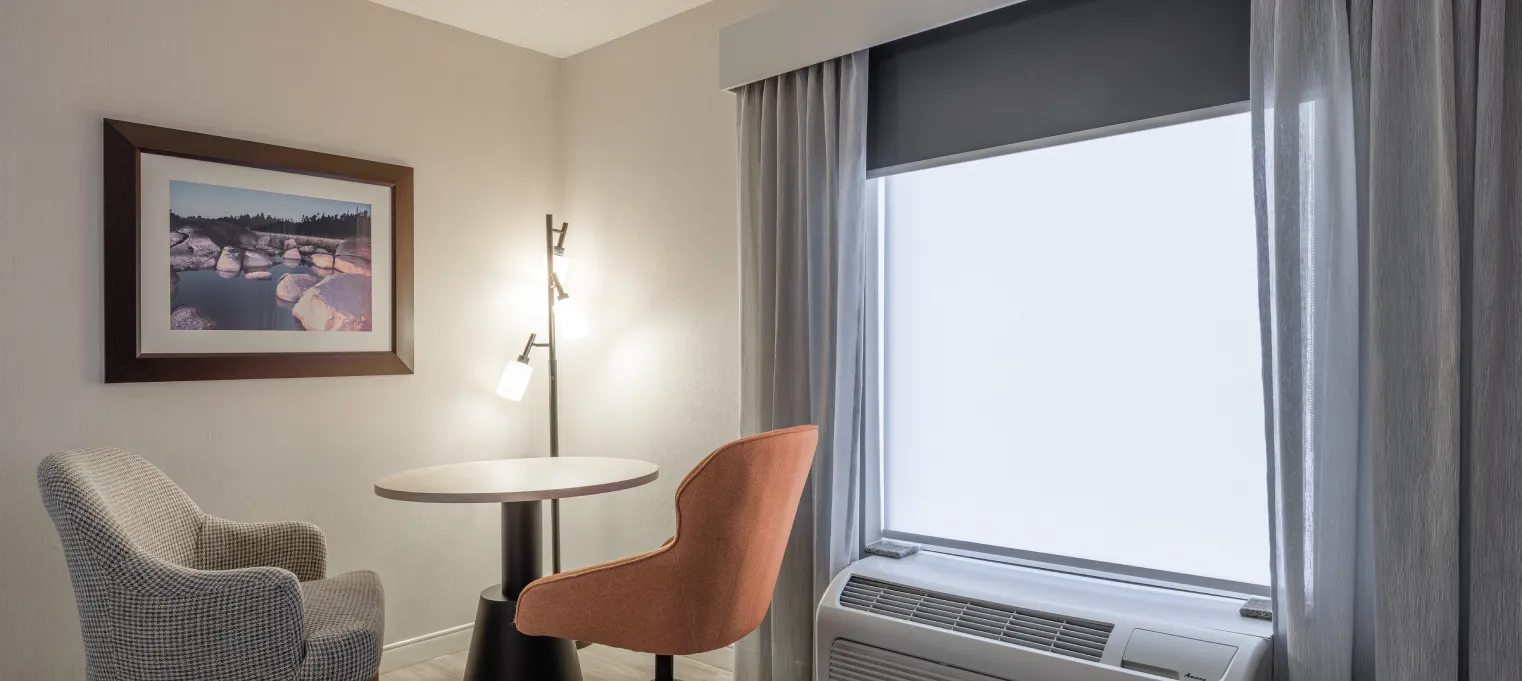
Selecting the right curtains for a hotel or any accommodation space means balancing aesthetics, functionality, and compliance.
From guest rooms and shared areas to bathrooms, each curtain and heading type has its own distinct features.
Here’s our complete guide to help you make an informed choice.
Main Types of Curtains
Window treatments in hotels play a key role in setting the ambiance, enhancing comfort, and improving overall functionality.
By combining multiple curtain types and fabrics across different rods or tracks, you can manage lighting, ensure privacy, improve acoustics, and even boost energy efficiency.
Sheers
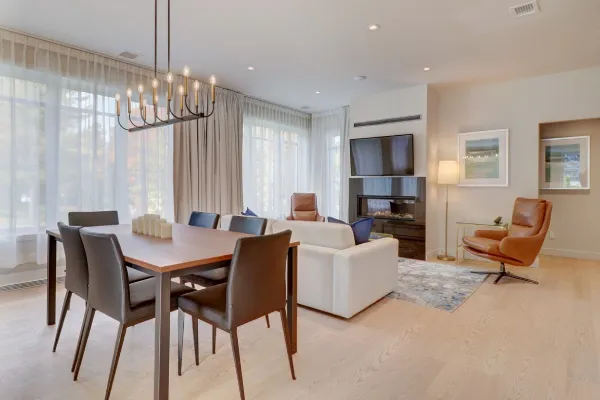
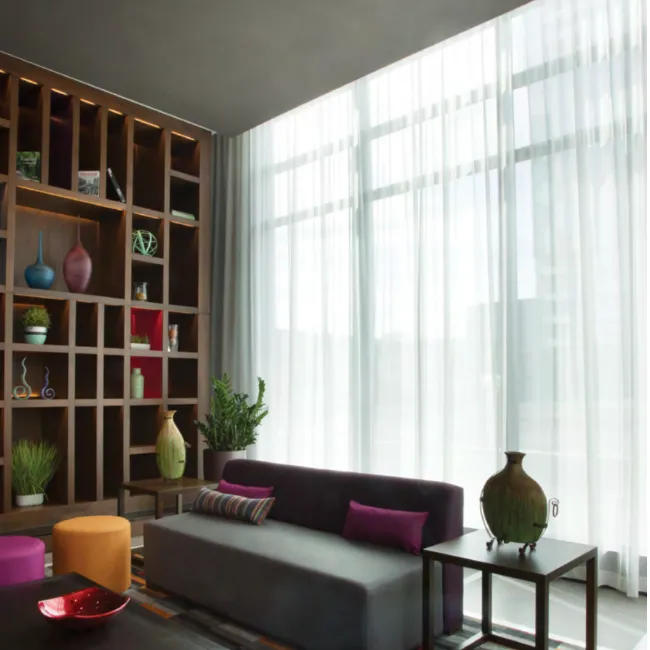
Light and decorative, sheer curtains softly filter natural light while creating a calm, soothing atmosphere. They’re ideal for rooms with a view, hotel lobbies, and certain meeting rooms, adding elegance without weighing down the space.
Sheers are usually made from lightweight, airy fabrics like polyester and linen (with a low cotton content), chosen for their graceful drape, ease of care, and elegant texture.
Light-Filtering Curtains
These curtains offer privacy while still allowing some daylight to enter, making them ideal for low-sunlight rooms, lounges, meeting rooms and common areas where a balance between brightness and privacy is needed.
They’re typically crafted from tightly woven fabrics such as cotton, linen, polyester, or jacquard, combining style, durability, and low maintenance.
Blackout Curtains
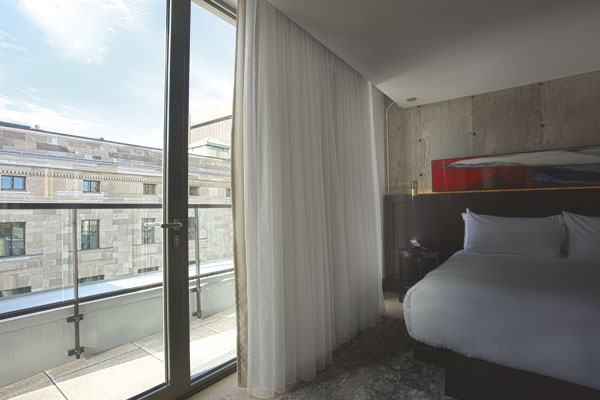
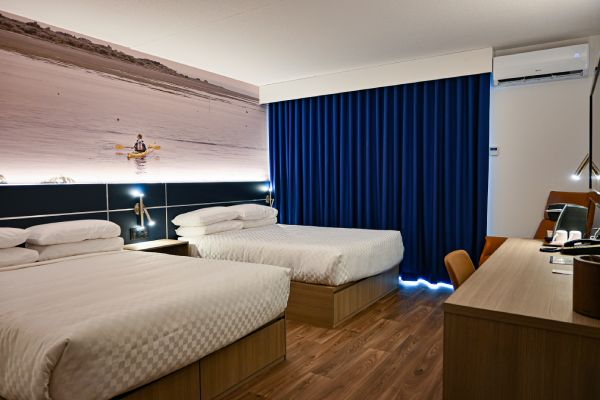
A must-have in the hospitality industry, blackout curtains block 90% or more of incoming light to ensure optimal sleep quality—hence their popularity in rooms and suites.
They are often made from velvet, blackout canvas, or lined fabrics, and are frequently paired with sheers to allow precise control of natural light.
Other Curtain Types
Beyond standard decorative and functional curtains, some types serve very specific needs. Whether to meet safety regulations, define spaces, or outfit an outdoor terrace, these technical solutions are just as crucial in a hotel’s design strategy.
Outdoor Curtains
These are designed for terraces, balconies, or pergolas. Weather-resistant, they provide sun protection and ensure privacy.
Fire-Retardant Curtains
Compliant with current safety standards in the hotel industry, fire-retardant curtains are mandatory in certain commercial and institutional establishments. In Canada, many projects must comply with the CAN/ULC-S109 standard, which governs flame-resistance testing for fabrics and textiles used in public buildings.
Motorized curtains
Increasingly popular in modern hotels and high-end suites, motorized curtains offer enhanced comfort and an improved guest experience. Although they are not a curtain type in themselves, motorization affects several technical elements such as fabric weight, rail selection, opening system, and frequency of use.
Shower Curtains
Essential for bathrooms, shower curtains are available in various sizes and materials, and are often treated to resist mold and mildew. In some hotel configurations, they may consist of two textile panels: an inner waterproof liner that prevents water from escaping, and an outer decorative panel that contributes to the overall bathroom aesthetics.
Divider Panels
Ideal for defining spaces in open environments, separator panels offer both an aesthetic and functional solution. Custom-made, they help create private areas while adding a unique design touch.
Comparison table of curtain types
Here is a comparison table of the main types of curtains used in hotels and commercial environments to better understand their characteristics and applications.
| Type of curtain | Main function | Light control | Recommended spaces | Key features |
|---|---|---|---|---|
| Sheer curtains | Filter natural light | High light transmission | Lobbies, rooms with views, meeting rooms | Light, decorative look, soft ambiance |
| Blackout curtains | Block light | 90%+ light blocking | Guest rooms and suites | Enhances sleep quality and guest comfort |
| Opaque curtains | Provide privacy | Partial light reduction | Lounges, bedrooms, common areas | Balance between brightness and privacy |
| Outdoor curtains | Protect from weather and sun | Varies | Terraces, balconies, pergolas | Weather-resistant materials |
| Fire-retardant curtains | Meet safety standards | Varies | Hotels, commercial buildings | Complies with fire safety regulations |
| Motorized curtains | Automated operation | Fabric-dependent | Suites, modern hotels, conference rooms | Smart building integration |
| Shower curtains | Prevent water splashes | Opaque or translucent | Bathrooms | Mold and mildew resistant |
| Room dividers | Separate spaces | Varies | Open spaces, multifunction rooms | Decorative and functional division |
Types of Curtain Headings
The curtain heading affects both the look and the functionality of the curtain. It determines how the fabric falls, how easy it is to operate, and how well it complements the rod or track system. The right heading provides the perfect balance of style and practicality.
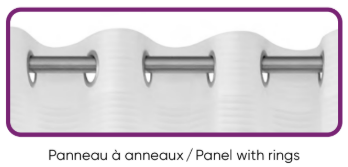
Rings or grommets
Metal grommets are embedded directly into the fabric, allowing curtains to glide smoothly over an exposed rod. A popular choice for contemporary rooms, they are easy to open and close daily. This type of curtain heading offers the possibility to cover the entire width of a window with a single custom-made panel, ensuring flawless aesthetics.

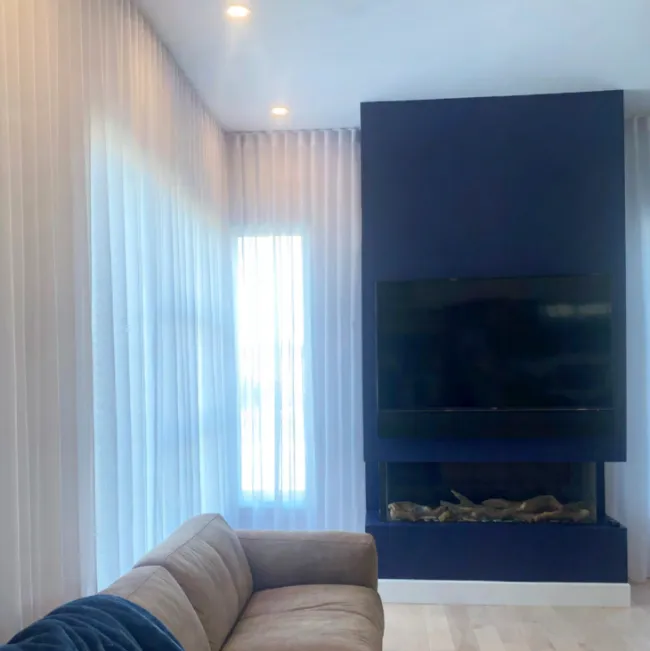
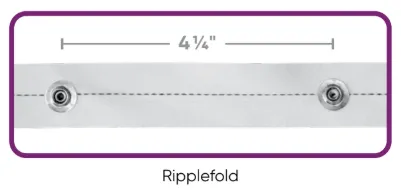
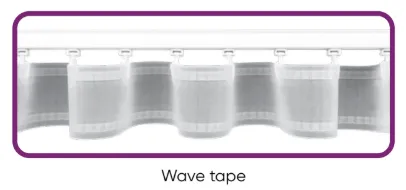
Ripplefold and Wave Tape
The fabric of the curtains is attached at equal intervals on an invisible rail, ensuring a constant, smooth, and elegant ripple. The difference between “Ripplefold” and “Wave Tape” curtains lies in the attachment method: snap buttons for the former and Velcro tape for the latter. These fastening methods offer a high-end solution, highly sought after in luxury hotels and minimalist environments.
Pleats
In this type of curtain heading, the pleats (several types of pleats are available) are carefully fixed at the top to create a grand effect and a smooth fall. The simple installation with hooks allows for a wall-to-wall design, perfect for elegant spaces.
Taking measurements is easy, and direct installation on the ceiling with rails ensures both aesthetics and functionality. The panels glide smoothly in the rails, and the addition of tiebacks makes it easy to handle them without risking damage to the fabric.
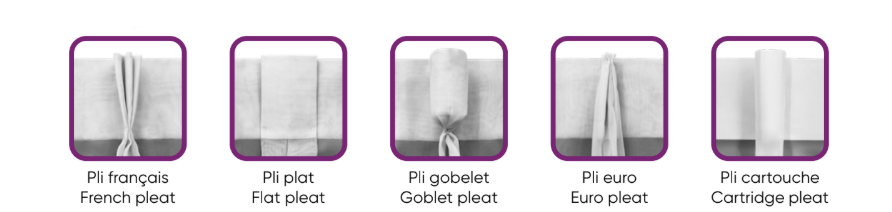
At Textiles Patlin, we offer microflex hooks — adjustable, durable, and machine-washable without damaging the fabric. A definite advantage!
Rod Pocket
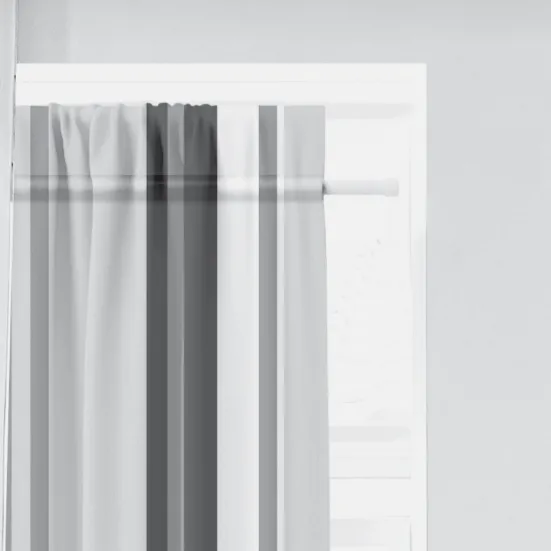
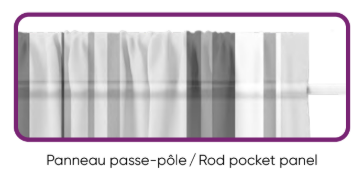
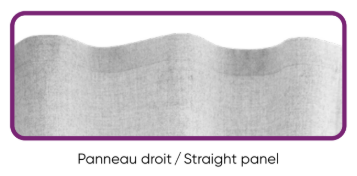
The curtain rod slides directly through a top hem. This style creates natural folds and offers a clean, minimalist look — ideal for calm, rustic, or zen-inspired settings.
Tabs
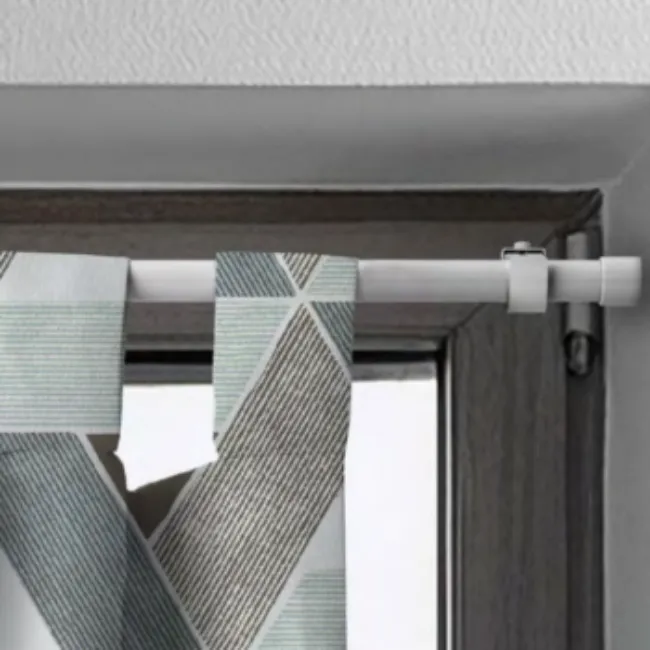
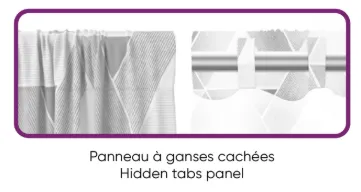
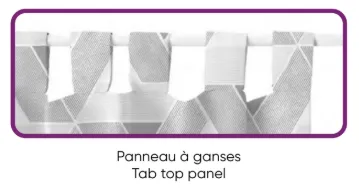
Tabs curtain headings are an elegant and practical option, offering a simple and natural effect. This type of heading consists of fabric tabs, typically sewn into the top of the curtain, through which a rod is inserted. This design allows for easy installation and smooth curtain movement. Ideal for a relaxed style, these headings fit perfectly in modern or more informal settings.
Summary table of curtain heading types (curtain top treatments)
Here is a comparison table of the main types of curtain headings used in hotel environments, designed to better understand their differences in terms of style, functionality, and installation.
| Heading type | Visual style | Functionality | Installation | Recommended use |
|---|---|---|---|---|
| Eyelets (grommets) | Contemporary and clean | Very smooth gliding on rod | Exposed curtain rod | Modern rooms, contemporary hotels |
| Ripplefold / Wave Tape | High-end, uniform | Consistent, fluid wave folds | Hidden track system | Luxury hotels, minimalist designs |
| Pinch pleat (and variations) | Classic and elegant | Structured yet fluid drape | Track with hooks | Elegant spaces, traditional or upscale hotels |
| Pole pocket / straight curtains | Casual and minimalist | Natural, soft folds | Rod inserted through fabric | Zen, rustic, or simple interiors |
| Tab top curtains | Casual and decorative | Smooth movement on rod | Exposed curtain rod | Modern or informal décor styles |
Trust Patlin to Help You Choose the Right Curtains for Your Hotel
In summary, here are some key criteria to consider when choosing curtain types and headings:
- Room function – Guestroom, bathroom, or shared space?
- Privacy level needed – Full blackout or just a decorative touch?
- Frequency of use – Daily opening/closing or fixed curtain?
- Desired style – Modern, classic, rustic?
- Maintenance – Choose washable, durable fabrics.
- Compliance – Fire safety standards may apply.
That said, for truly customized window treatments tailored to your needs, no one offers a more personalized result than Textiles Patlin.
Our turnkey service includes on-site measurement, custom-made fabrication, and professional installation — all delivered on schedule and in line with hospitality standards.
FAQ – Curtain types and curtain headings
The main types of curtains used in hotels are sheer curtains, opaque curtains, and blackout curtains. In addition, there are technical solutions such as outdoor curtains, fire-retardant curtains, motorized curtains, shower curtains, and room dividers, depending on the needs of each space.
An opaque curtain filters light while still allowing some natural brightness into the room, whereas a blackout curtain blocks up to 90% or more of light. Blackout curtains are therefore preferred in hotel rooms and suites to enhance sleep comfort.
In hotel rooms, a combination of sheer curtains and blackout curtains is commonly used. Sheer curtains allow natural daylight during the day, while blackout curtains provide privacy and optimal sleep conditions at night.
A curtain heading (or curtain top treatment) refers to how the curtain is attached to the rod or track. It affects the visual style, fabric movement, and ease of use.
The main curtain headings include eyelets (grommets), pinch pleats and variations, Ripplefold / Wave Tape systems, pole pockets, and tab tops. Each option provides a different aesthetic and level of functionality.
In hotels, track systems with pinch pleats or Ripplefold are often preferred for their durability, uniform appearance, and ease of use. Eyelets are also popular in modern hotel rooms.
In certain buildings, yes. Fire-retardant curtains must comply with fire safety standards such as CAN/ULC-S109 in Canada, particularly in commercial and institutional buildings.
Yes, this is a common practice in the hospitality industry. For example, sheer curtains are often combined with blackout curtains to better control light, privacy, and guest comfort.